Anambra Women’s Inheritance Rights: Denial Could Mean Jail
From hospital bedside to locked out of her father's house — Anambra says denying a daughter because she is female is no longer tradition, it is a crime.

By Sylvia Tochukwu-Ngige
A daughter nurses her sick father for months. She pays hospital bills, prepares his meals and stays by his bedside. But when he dies, her brothers change the locks and tell her she has no right to the family land. This is the painful reality behind Anambra women inheritance rights.
A widow buries her husband, only to discover that his relatives have taken over his shops, sold his land and ordered her to return to her father’s house. These are not isolated cases, they are part of the ongoing struggle for Anambra women inheritance rights.
For generations, many women have endured these [painful experiences](/link-to-your-old-post) under the excuse of tradition. But in Anambra State, a new legal directive has brought the issue of Anambra women inheritance rights into sharper focus.
On September 29, 2026, Anambra State Attorney-General and Commissioner for Justice, Tobechukwu Nweke, SAN, reportedly issued a directive stating that denying a woman or girl her inheritance solely because of her sex constitutes a criminal offence under the state’s applicable laws. This development is a major step for Anambra women inheritance rights.

The directive reportedly instructs the Nigeria Police Force to investigate complaints of gender-based disinheritance and forward case files to the Ministry of Justice for possible prosecution.
When Tradition Becomes Injustice
Across parts of the South-East, the excuse is familiar: land and family property belong to male children because they preserve the family name. But who preserved the family when parents were ill? Who contributed money to build the house? Who paid school fees for younger siblings Often, it was the daughter.
Widows face an even harsher reality https://sylviangige.com/category/women-world/. Some are denied access to property they helped build, removed from their homes, or blocked from running businesses.
The WomenAid Collective (WACOL) https://wacolnigeria.org has documented these patterns. One case from Eha-Amufu, Enugu State, reportedly involved a woman who built her father’s house with her own money, only to have male relatives challenge her right to own it. Another from Umuchu, Anambra State, reportedly involved a widow locked out of her husband’s shops while his family sold land without informing her.

These are not isolated stories. They reveal a painful contradiction: women contribute to family wealth but are told they cannot benefit from it.
What Does The Law Actually Say?
This is not new law, it is enforced law.
1. The Constitution: Section 42(1) of the 1999 Constitution https://www.constituteproject.org/constitution/Nigeria_1999.pdf prohibits discrimination on grounds of sex.
2. The Supreme Court: In the landmark 2014 case of Ukeje v. Ukeje, the Supreme Court held that an Igbo customary law that disinherited female children because of their sex is unconstitutional, null and void.
A custom cannot override the Constitution simply because it is old. The problem has never been the absence of law. The problem has been enforcement in kindred meetings, village squares, and family parlours.
Why Anambra’s Move Matters: The VAPP Law
Anambra’s reported directive invokes Section 22 of the Anambra VAPP Law, 2017 — the Violence Against Persons Prohibition Law. Under this framework, denying inheritance based on gender is classified as economic violence.
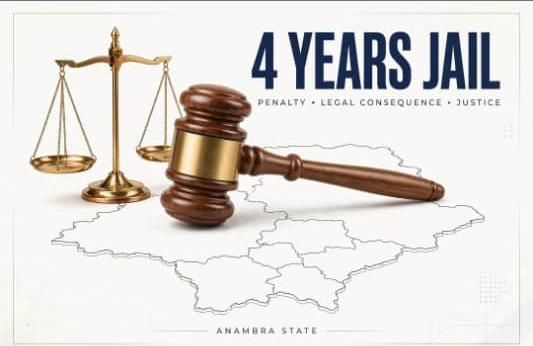
The implication is clear: conduct that falls under this law may attract criminal consequences, including up to four years imprisonment, subject to evidence and due process.
Not every inheritance disagreement is automatically a crime. Each case must be examined on its facts. But Anambra has given women what they never had before — a clear path to report, and a law that says the police must listen.
Will It Work?
A directive alone will not erase decades of bias. Many women still fear reporting their own brothers and uncles. Many worry about access to legal aid, police response, and slow prosecution.
For this to work, three things must happen: women must know their rights, police must investigate fairly, and community leaders — umunna, igwes, traditional rulers — must understand that peace cannot be built on exclusion. Tradition deserves respect when it promotes unity. It loses that respect when it violates constitutional rights.
What To Do If You Are Denied Your Inheritance In Anambra
1. Report it: Go to the nearest police station and state the facts. Ask that it be assessed as economic violence under VAPP Law.
2. Get a lawyer: Consult a qualified lawyer or legal aid clinic to establish your rights.
3. Contact a women’s rights organization: Groups like WACOL can provide guidance, advocacy, and referrals.
4. Preserve evidence: Keep property documents, receipts, photos, wills, and any family correspondence.
5. Know your law: Your strongest references are Section 42 of the 1999 Constitution and the Supreme Court judgment in Ukeje v. Ukeje.
Do not surrender your right because someone tells you “Nwanyi anaghi eketa ala.”
Sylvia’s Take
I grew up hearing the familiar message that a woman’s brother would inherit and preserve the family land. In many homes, mother’s worked tirelessly for decades, trading and making sacrifices to educatetheir children. Sometimes, the boys were given special consideration because they were expected to carry on the family name.
But I keep asking: Who kept the family when Papa was sick? It was often the daughter who sat by the hospital bed, paid the bills, and sacrificed her comfort. Why should she become a stranger when property is shared?
Anambra’s message to families and traditional institutions is simple: inheritance disputes must be handled within the law, not through intimidation.
To every woman across all communities in Anambra: do not stay silent. Seek advice. Understand the law. A woman’s right should not disappear because she is a woman.
What do you think? Should other South-East states enforce this too? Have you or someone you know experienced this? Share your story in the comments — your story may help another woman realize she is not alone.
—
Disclaimer: This article provides general legal information and does not constitute legal advice. The application of Anambra VAPP Law Section 22 and penalties depends on the facts of each case and court interpretation. Readers should consult a qualified lawyer for advice on their specific situation._
Sources: 1999 Constitution Section 42(1); Supreme Court judgment Ukeje v. Ukeje (2014); Anambra State VAPP Law 2017; WACOL reports, October 2026.
Photo Source: AI illustration / http://Sylviangige.com