Women political representation Nigeria: 73 Men, 3 Women Gap
The APC campaign invitation list with 73 men and just 3 women has reignited debate over women's exclusion from Nigeria's political decision-making rooms.

By Sylvia Tochukwu-Ngige
Women political representation Nigeria is under spotlight after a leaked All Progressives Congress (APC) campaign invitation list showed 73 men and just 3 women, reigniting debate over women’s exclusion from political decision-making rooms ahead of 2027. That was the gender breakdown of the 76 names on an invitation list for a key meeting of the APC Presidential Campaign Council, according to a report published by Premium Times on October 20, 2026. Women accounted for just 3.9 per cent of those listed.
I had to read that figure twice. Not because women’s underrepresentation in Nigerian politics is new, but because the numbers reveal how far we still have to go in building an inclusive political system.
Consider Rwanda, where women occupy 63.8 per cent of seats in the lower parliamentary chamber, making the country a global leader in women’s legislative representation. Its Constitution guarantees women at least 30 per cent of those seats.
Nigeria’s experience is different. Women remain significantly underrepresented in elected offices and influential political positions. The question is no longer whether women can lead, but why the political system continues to limit their opportunities.
Three Women in a Room of 76
The APC meeting list has reignited concerns about women’s access to political decision-making. The three women named in the report were Zainab Marwa, Hadiza Usman and Stella Okotete, whose roles were listed as secretarial and support positions, according to the invitation list reviewed.
To be clear, the figures relate to the 76 names reviewed, not necessarily the entire Presidential Campaign Council. Nevertheless, the imbalance raises an important question: where are the women when political strategies are developed and decisions about leadership are made?
Women are frequently mobilised during campaigns, asked to attend rallies and celebrated for their contributions to political movements. Yet their presence in influential decision-making spaces remains limited.
Representation must mean more than appearing in photographs or supporting candidates. Women must have opportunities to contribute ideas, influence policies and participate meaningfully in leadership.
Rural Women Deserve More Than Recognition
The challenge extends beyond party politics. On October 15, 2026, the International Day of Rural Women, Peter Obi visited members of the Akpu Sellers Association at Sheda and Sheda Galadima markets in the Kwali Area Council of the Federal Capital Territory.
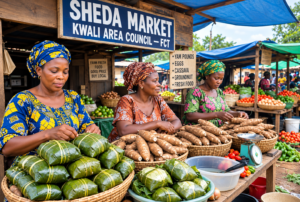
Reports of the visit indicated that the women raised concerns about inadequate water supply, low business patronage and limited access to microcredit.
These women process cassava, sell food, support households and contribute to local economies. Yet many struggle to obtain the resources needed to expand their businesses.
Their experiences raise a fundamental question: how can policies adequately address women’s challenges when women remain insufficiently represented in the rooms where those policies are formulated? This shows how women political representation Nigeria is linked to economic struggles at the grassroots.
Market visits and public engagements are useful, but they must lead to practical action. Rural women need accessible financing, reliable infrastructure, business support and opportunities to participate in decisions affecting their livelihoods.
Economic Strength, Political Barriers
Think of Onitsha Main Market, where women have built thriving businesses, employed workers, educated children and supported extended families through years of trading.
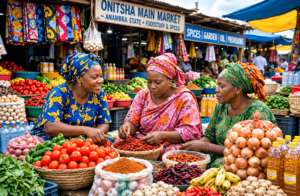
Across Nigeria, women contribute significantly to agriculture, commerce, public service and household economies. Their resilience is evident in markets, offices, farms and small businesses. Despite their dominance in trade, women political representation Nigeria remains low in formal politics. Yet economic achievement does not automatically translate into political power.
The barriers confronting women seeking elective office include expensive nomination forms, campaign costs, limited access to political networks, insecurity, intimidation and cultural expectations surrounding domestic responsibilities.
A woman may build a successful business but still struggle to finance a political campaign. Others face pressure to choose between public ambition and family expectations.
These challenges should not be interpreted as a lack of interest in politics. They raise questions about whether women have a fair opportunity to participate.
From Affirmative Action to Enforceable Laws
Nigeria’s National Gender Policy, adopted in 2006, recommended a 35 per cent affirmative-action benchmark for women’s representation. However, that policy recommendation is not equivalent to an enforceable law requiring every political party to meet the quota.
Rwanda demonstrates how constitutional provisions can support women’s representation. Nigeria can examine such experiences while developing measures consistent with its own constitutional and political system.
As preparations for the 2027 elections approach, political parties should adopt measurable targets for women’s participation in leadership, candidate selection and campaign councils.
Lawmakers should also consider legally enforceable measures, with clear compliance requirements and appropriate consequences for non-compliance.
Campaign financing deserves attention, too. Transparent funding arrangements and stronger enforcement of campaign finance rules could help reduce barriers facing qualified women.
Economic empowerment programmes are important, but political participation requires additional measures that directly address the costs and obstacles of seeking public office. Improving women political representation Nigeria will require enforceable quotas, experts say.
Sylvia’s Take
I am tired of discussing women’s political representation as though the problem will disappear on its own.
It will not disappear simply because we celebrate successful women during International Women’s Day or praise female entrepreneurs at empowerment programmes.
We must examine the structures that determine who gets nominated, who receives financial support, who can afford to campaign and who gets invited into rooms where important decisions are made.
The APC meeting list offers a striking example of the imbalance: 73 men and three women among 76 names reviewed.
However, this is not simply an APC problem. It raises a broader question about Nigeria’s commitment to translating women’s contributions into meaningful political representation.
Rwanda’s experience shows that institutional rules can make a difference. Nigeria’s own gender policy acknowledges the need for affirmative action, but commitments must be matched by implementation.
To the women in politics, business, public service and community leadership, your contributions matter. To the women processing cassava, running market stalls and raising families while building businesses, your concerns deserve attention beyond campaign season.
Nigeria must move from celebrating women’s contributions to creating meaningful opportunities for women to shape the decisions that affect their lives.
Visibility matters, but influence matters more.
Over to You
Should Nigeria introduce legally enforceable quotas requiring political parties to include a minimum percentage of women in leadership and candidate selection? Or should the focus be on removing financial, cultural and institutional barriers?
Let’s discuss.